


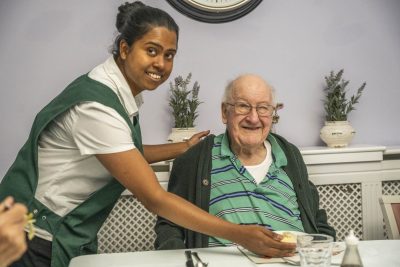
When someone you love is in hospital, it can feel as though life has been paused. Everything becomes about getting well, getting answers, and getting home. But sometimes going straight back home isn’t the safest or most supportive next step – especially when mobility, confidence, or overall health have taken a knock.
That’s where a short stay at a Buckland Care home can offer breathing space, comfort, and steady support. And if long-term care is needed, we help families understand their options at a pace that feels manageable.
This guide explains what the process looks like, who makes the decisions, and how we support each person from the moment they arrive.
Why someone might move from hospital into a care home
There are lots of reasons this step might be suggested. Some people need time to rebuild their strength after an illness or operation. Others need help with daily tasks — washing, dressing, taking medication, or eating well – that would be difficult to manage alone at home. Some need nursing care, specialist dementia support, or a safer environment while they recover.
Hospitals are designed for acute medical treatment. Care homes offer the steady, everyday support that helps people rest, regain confidence, and feel more like themselves again.
At Buckland Care, many of our residents come to us after a hospital stay – for a few weeks or, in some cases, for longer. We understand the emotional side of this transition just as much as the practical side.
Who decides whether a care home stay is the right next step
No single person makes this call. It’s usually a team decision involving:
- Hospital consultants and doctors
- Nursing staff
- Occupational therapists and physiotherapists
- Discharge coordinators
- Social workers
- Pharmacists
- Sometimes mental-health professionals or housing specialists
And crucially – the patient and family are involved throughout.
A care home is never chosen “for” someone; it should always be a collaborative conversation built around what feels safe, realistic, and respectful.
If a person lacks capacity to decide, the team will work with the family and follow legal best-interest procedures.
Understanding “Discharge to Assess”
Across England, hospitals use a system called Discharge to Assess (D2A). It simply means:
- If you no longer need hospital treatment
- But you still need support
- You’ll be moved to a community setting (often a care home)
- And your long-term needs will be assessed outside hospital
A care home stay through D2A is usually short-term and fully focused on making sure you’re in the right place with the right support.
Once settled at Buckland Care, professionals can see more clearly:
- Whether returning home is realistic
- Whether home care is enough
- Whether a longer stay in a care home would offer more stability
- What equipment or adaptations might be needed
It gives families time and breathing space — rather than forcing rushed decisions in a hospital corridor.
What planning looks like before you leave hospital
Before discharge happens, the hospital team will create a discharge plan, which might include:
- Current health needs
- Medication updates
- Mobility or rehabilitation requirements
- Equipment recommendations
- Risks to consider at home
- What support is needed immediately
- When the next review will take place
- A named contact for any concerns
You will never be handed a bag of clothes and rushed out without a plan being agreed. Discharge should be safe, appropriate, and clearly communicated.
What happens when someone arrives at a Buckland Care home
We know arriving somewhere new after a hospital stay can feel daunting, so we keep the process calm, gentle and human.
We take time to settle people in
There’s no rushing, no pressure, and no long checklists the moment you walk through the door. We get people warm, comfortable, welcomed and oriented first.
We create a personal care plan
Within the first 24 hours, our team will:
- Speak with the resident and family
- Review hospital notes
- Listen to preferences, routines, concerns and comforts
- Understand any anxiety, confusion or mobility limitations
- Build a care plan that reflects the person, not just their needs
This care plan evolves as the person settles and recovers. Nothing is set in stone.
Your space feels like home
We encourage families to bring familiar things – a blanket, framed photos, a favourite cardigan, toiletries, books, anything that helps someone feel safe.
We keep communication open
Families can call, visit and stay involved. We know this transition affects the whole family, not just the resident.
What a short-term convalescent stay involves
During a few weeks with us, a person may:
- Regain mobility with gentle support
- Build strength through nutrition and routine
- Recover confidence in daily tasks
- Rest in a calm, caring environment
- Receive ongoing nursing oversight (if needed)
- Feel part of a warm, social community
We track progress carefully and keep families updated.
If the person becomes well enough to return home, we help organise that – making sure support is in place so the move feels safe.
If longer-term care is needed, we guide families through options with honesty and kindness.
If a longer-term stay is required
Sometimes a hospital stay reveals how much someone has been managing at home – often far more than anyone realised. If a longer stay is recommended, we talk it through gently, clearly and without pressure.
A permanent move can feel emotional. Our job is to make the process feel less overwhelming – answering questions, offering tours for family, and creating space to process the change.
Funding and costs
How the stay is funded will depend on:
- Whether it’s part of the Discharge to Assess pathway
- Whether the person qualifies for NHS Continuing Healthcare
- Their financial circumstances
- Whether the local authority is involved
For short D2A stays, funding is often fully covered.
For longer-term residential or nursing care, a financial assessment is carried out.
At Buckland Care, we explain everything in plain, compassionate language – so families never feel left guessing.
Support for families during this transition
Moving from hospital to a care home is rarely something families expect or feel prepared for. It can bring up worry, guilt, uncertainty, relief – or all of the above.
We understand that.
Our teams take time to answer questions, reassure where needed, and include families in every part of the journey. We treat this as a partnership, not a handover.
You won’t feel left in the dark. You won’t feel like a burden for asking questions. And you certainly won’t feel alone.